

Milanese Cuisine
Milanese Saffron Risotto
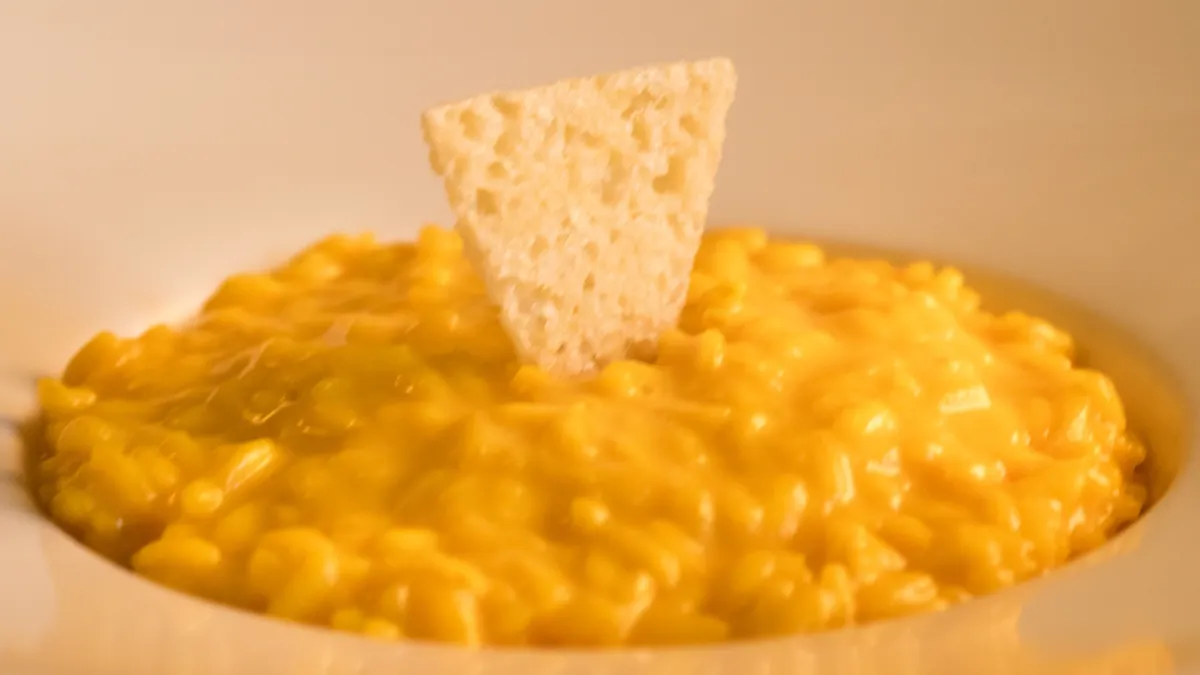
Milanese Risotto is the iconic dish that tells what it means to cook in Milan. Prepared with real saffron and Carnaroli rice.
What is Milanese Risotto?
Milanese Risotto is one of the most iconic dishes of Lombard and Milanese cuisine, dating back to the 16th century. Its distinguishing ingredient is saffron, which gives the dish its characteristic golden yellow color and a delicate, unmistakable aroma. It is prepared with rice (we use Carnaroli Rice from Cascina Resentera), meat broth, onion, butter, white wine, and plenty of Grana Padano, following the classic risotto technique: toasting the rice, gradually adding hot broth, and final creaming (mantecatura) with butter and cheese to obtain a creamy and velvety consistency.
The History of Milanese Risotto
Legend tells of a Flemish master glassmaker named Valerio of Flanders — known for using saffron to dye his glass — and his assistant whom everyone called Zafferano, for his habit of adding that spice to every pigment. At the wedding feast of the master’s daughter, as a joke (or an act of revenge), someone had saffron added to the risotto served to the guests. The result, instead of scandalizing, enchanted everyone. The dish became famous. Legend or not, history tells us something true: saffron was already precious, already used in Milan, and its encounter with rice was something extraordinary. The first documented traces of a saffron risotto appear in Milanese culinary texts of the early 19th century. But the recipe codified in the form we know today consolidated in the second half of the 19th century, becoming a symbol of the Milanese bourgeoisie and then of the entire city.
The Technique: A Ritual Not to Be Shortened
Making a Milanese Risotto requires presence. You cannot leave the stove, you cannot speed up the broth, you cannot rush the creaming. Risotto teaches patience to those who do not have it and rewards those who do.
The process has precise stages: a sauté (soffritto) is made with chopped onion and beef marrow in butter over low heat until the onion is transparent and almost dissolved. Then, with toasting, the rice enters the pan and is dry-toasted, stirring continuously, until the grains become translucent at the edges and warm to the touch. This step seals the starch and prepares the rice to absorb the broth evenly. Next, it is deglazed with white wine, when the steam rises and the alcohol evaporates quickly. During cooking, the broth enters one ladle at a time, always hot, adding it only when the previous one has been absorbed, stirring regularly but not obsessively. Finally, with the creaming (mantecatura), the heat is turned off, butter and Grana Padano enter the pan, and it is stirred vigorously. The Risotto is ready to be served.
All’onda: The Measure of the Perfect Risotto
All’onda (literally “wave-like”) is an expression that deserves separate reflection. It indicates the ideal consistency of Milanese risotto: when it is poured onto a flat plate and lightly shaken, the rice must move like a small, slow wave. It should not remain motionless like a pudding, nor spread out watery like a soup.
Reaching this consistency is the true test for a chef. It requires experience, an eye, and — especially — the courage to take the risotto off the heat a moment before it seems ready, knowing that it will continue to cook in its own heat.
With or Without Ossobuco?
In the most classic Milanese tradition, Milanese Risotto and ossobuco form one of the most famous pairings in Italian cuisine. Ossobuco in gremolata — with its gremolata of lemon, garlic, and parsley — is served alongside the yellow risotto, and the marrow from the bone naturally mixes with the rice.
It is a pairing that works because the flavors complement each other: the risotto brings creaminess and the sweetness of saffron, while the ossobuco brings structure, acidity, and citrus fragrance.
At Alla Cadrega, we also serve the risotto as a standalone dish, without the ossobuco. Because a well-made Milanese Risotto doesn’t need accompaniments to be extraordinary. It stands on its own, with all its elegance.
FAQ — Questions about Risotto
Is risotto available all year round?
Yes, Milanese Risotto is on our menu all year round, but it is in the cold months — from October to April — that it expresses its best. The warmth of the saffron, the aroma of the broth, the creaminess of the butter: these are sensations that belong to the Milanese winter, with the fog outside and the warmth inside.
What rice do you use for the risotto?
For our risotto, we have chosen 100% Classic Carnaroli Rice in its purity from the Azienda Agricola Fedeli of Cascina Resentera (PV). Its large, consistent, and tapered grains blend harmoniously with the ingredients and guarantee optimal cooking resistance.
Is a reservation necessary?
While not mandatory, we highly recommend Booking a Table especially during the weekend, to ensure you enjoy our risotto without waiting.